Court secrecy, a handcuffed journalist, ‘Access Denied’: CFOIC’s year-in-review 2018
Two words come to mind when looking back at 2018’s government transparency highlights and lowlights in Colorado. Judicial secrecy.
Two words come to mind when looking back at 2018’s government transparency highlights and lowlights in Colorado. Judicial secrecy.

A judge ruled against a Texas-based consultant who alleged that Colorado’s recently retired securities commissioner violated the Colorado Open Records Act by refusing to fulfill a records request “unless and until” the consultant identified his client.

The mother of a 19-year-old man who was killed during a confrontation with police last year is on a mission to make law enforcement body camera footage more available to the public under Colorado law.

A district court judge in Delta County ruled that the town of Paonia improperly invoked CORA’s safe harbor clause in a lawsuit against Bill Brunner, a former town trustee who had requested numerous records in 2017. Not only should the town have turned the records over to Brunner, Judge Steven Schultz wrote, he is entitled to be reimbursed for his legal costs and attorney fees because Paonia officials “failed to exercise reasonable diligence or reasonable inquiry” before going ahead with the suit.

With no process for appealing public records denials short of filing a lawsuit, Colorado might want to look at a two-year-old system in Ohio, which lets anyone challenge a denial for a $25 filing fee. The president of the Ohio Coalition for Open Government says residents of his state “now have a fighting chance – no matter their resources or standing” when they believe records are wrongly withheld.

A judge should deny the prosecutors’ motion to keep autopsy reports from the public in the Frederick triple homicide case because the criminal court lacks jurisdiction to decide that question, a media coalition and the Colorado Freedom of Information Coalition argued.

Should you have to show identification to inspect or get copies of public records? Unlike a few states such as Virginia and Tennessee, Colorado has no requirement that freedom-of-information requests be made by people who actually live in the state. So what’s the point? Is it legal?

Two years ago, the Colorado Freedom of Information Coalition published a study showing that at least 26 states offer some kind of dispute-resolution process as an alternative to suing the government for improperly withholding public records. We asked whether the Colorado Open Records Act (CORA) should provide another way to appeal a rejection. Now, a candidate for Colorado attorney general is trying to focus attention on the same issue by “crowdsourcing” a proposal on social media.

To commemorate CORA’s golden anniversary, the Colorado Freedom of Information Coalition asked a few Coloradans for their thoughts on what what the open records law means to them and what it has meant for the people of our state.
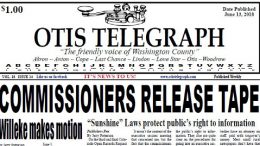
The Otis Telegraph calls itself “The friendly voice of Washington County” because it likes to promote the community, says co-publisher Jerry Patterson. “But every once in a while you have to step up and do things that papers are supposed to do. You have to ask the tough questions.”