By Jeffrey A. Roberts
CFOIC Executive Director
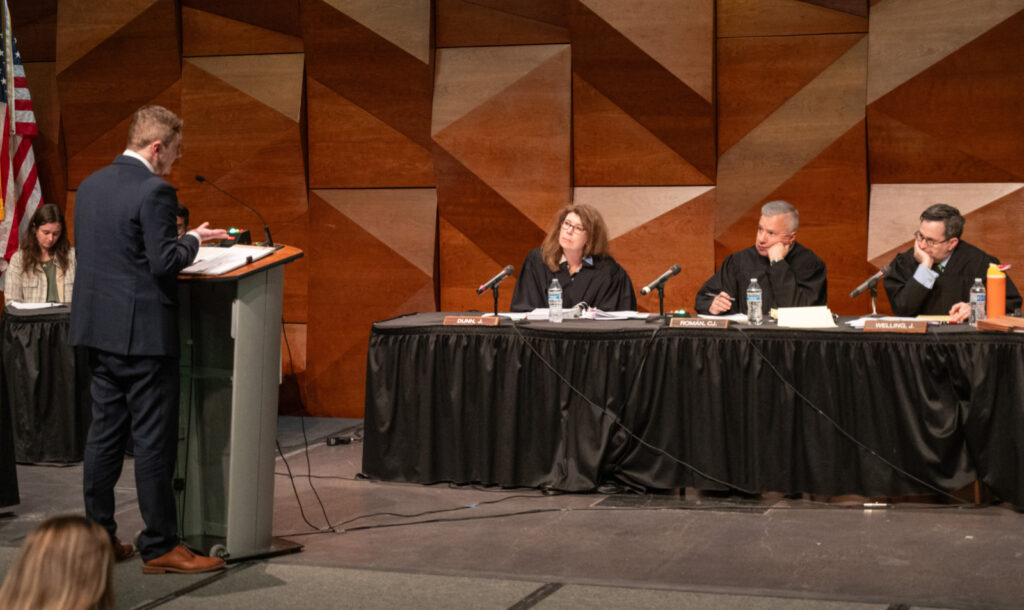
An appeals court opinion barring fees for some law enforcement body-worn camera footage should not be reviewed by the Colorado Supreme Court, a brief filed by Yellow Scene Magazine argues.
The city of Boulder, along with the Colorado Municipal League and the County Sheriffs of Colorado, have asked the state’s highest court to take up the April 9 ruling, which prohibits agencies from requiring payment before releasing video and audio depicting possible officer misconduct.
Boulder, in its certiorari petition, claims the Court of Appeals misinterpreted the Law Enforcement Integrity Act and the Colorado Criminal Justice Records Act (CCJRA). The Integrity Act, passed by the legislature in 2020 following the police killings of George Floyd in Minneapolis and Elijah McClain in Aurora, does not carve out footage requests from CCJRA’s fee provision, it contends.
But Yellow Scene’s opposition brief, submitted Thursday, says the appellate court correctly determined that the statutory language is “unambiguous: the CCJRA’s fee-authorizing provision does not apply to the Integrity Act, which plainly compels — without any regard to fees — the prompt release of unedited BWC footage and other recordings for every incident of alleged police misconduct.”
The underlying lawsuit, filed by the news organization two years ago, concerns the shooting and killing of 51-year-old Jeanette Alatorre by Boulder police in 2023. The city required Yellow Scene to pay $2,857.50 before it would release bodycam footage of the incident.
A district court judge ruled in the news organization’s favor, a decision upheld by the Court of Appeals. Disclosure of footage under the Integrity Act is mandatory when there is a complaint of police misconduct, a three-judge appellate judges noted, adding, “The command is clear, plain, and unconditioned on the payment of fees.”
Yellow Scene’s brief, prepared by Boulder attorney Matt Simonsen, contends the issues raised by Boulder and in amicus briefs submitted by the municipal league and the sheriffs “are best left to the legislature, not the courts.”
“Tellingly,” it says, “the legislature declined to abrogate the division’s ruling or authorize fees when it recently amended the exact provision at issue here — section 24-31-902(2) of the Integrity Act — more than a month after the division’s published opinion was announced on April 9, 2026.”
Under the statute as revised by the legislature this year, all unedited video and audio recordings of incidents in which there is a complaint to law enforcement of officer misconduct that does not result in a death must be released to the public within 21 days after a request is made. If alleged misconduct involving the use of force results in a death, an agency is required to provide to the person’s immediate family — unless they decline — “all video and audio recordings depicting the decedent’s death” within 21 days after the incident.
A complaint of misconduct is still required for journalists and the public to obtain the unedited video and audio of a use-of-force death. The bodycam or dashcam footage “shall” be released to the person making the request “following the expiration” of the 21-day period during which family members can get access.
CML’s brief argues the Court of Appeals decision “will impose extraordinary costs on local agencies, especially smaller agencies — an impact not funded by the state that is ultimately borne by local taxpayers.” Although the Integrity Act requires the release of unedited video and audio, “[t]he “reality of producing BWC footage consistent with LEIA is far more complex and expensive. LEIA requires blurring to protect the privacy interests in several scenarios and prohibits release of unblurred video without authorization of the victim or next of kin,” it says.
Boulder’s brief contends the appellate opinion “nullified” a 1991 law that makes state mandates optional unless the state reimburses local governments for their costs. “Because the General Assembly provided no funding for the purported mandate to provide blurred video to requesters free of charge, C.R.S. § 29-1-304.5(1) directs courts to interpret that language as optional,” it says.
Simonsen, in Yellow Scene’s brief, asserts that Boulder and CML “overstate the costs of compliance. Contrary to Boulder’s suggestion, blurring is not required (or even allowed) whenever privacy concerns may be implicated; it is appropriate only to address ‘substantial privacy concerns for criminal defendants, victims, witnesses, juveniles, or informants’ in the limited circumstances specifically enumerated by the Integrity Act.”
“Blurring is also far less resource-intensive than suggested,” the brief adds. “The legislature reasonably presumed that agencies carefully review footage of alleged police misconduct irrespective of any request to release that footage.”
Simonsen noted that “the unencumbered public release of BWC footage has played a vital role in securing accountability for police misconduct in Colorado … If someone must pay exorbitant fees before BWC footage is released, the public will rarely see ‘all unedited video and audio recordings’ of alleged police misconduct incidents.”
Follow the Colorado Freedom of Information Coalition on X and Bluesky. Like CFOIC’s Facebook page. Do you appreciate the information and resources provided by CFOIC? Please consider making a tax-deductible donation.