By Jeffrey A. Roberts
CFOIC Executive Director
It’s been 14 years since an amendment to the Colorado Open Meetings Law barred public bodies from using secret ballots to make decisions, but the Greeley City Council and the Bayfield Planning Commission recently took votes that way.
Greeley councilmembers cast secret ballots on May 5 to fill a council vacancy after interviewing six applicants during a public meeting. Bayfield planning commissioners marked pieces of paper on December 3 and again on June 9 to recommend new commission members to the town board of trustees.
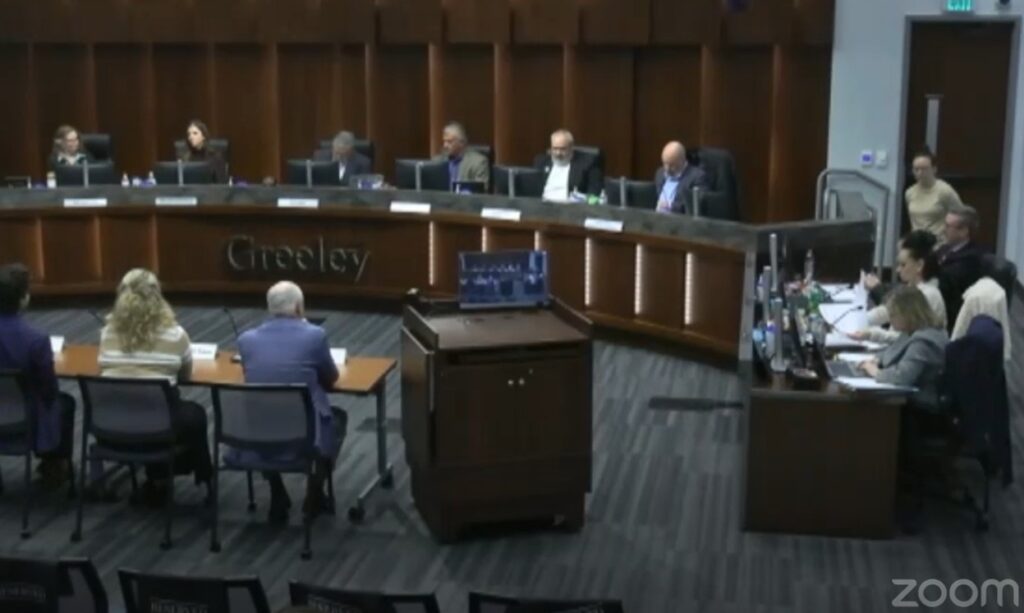
In all three instances, how each city councilor and planning commissioner voted was not announced to the public, according to videos posted by the public bodies. Minutes of the public bodies also do not show how each member voted.
Under an open meetings law provision added by the legislature in 2012, “[n]either a state nor a local public body may adopt any proposed policy, position, resolution, rule, or regulation or take formal action by secret ballot.” The term secret ballot “means a vote cast in such a way that the identity of the person voting or the position taken in such vote is withheld from the public.” An exception lets public bodies use secret ballots to choose their own leadership, such as board president or chair, or members of a search committee.
The secret ballots ban stems from a lawsuit filed by businessman Ronald Henderson, who objected when the Fort Morgan City Council used anonymous written ballots to appoint two councilmembers and a municipal judge in 2009 and 2010. After the Court of Appeals ruled in the city’s favor, the legislature amended the law.
“We were pretty clear in our legislative intent,” then-state lawmaker Bob Gardner, sponsor of the 2012 bill, told the Colorado Freedom of Information Coalition in 2015. “We intended total transparency in the filling of those vacancies … Everyone should have to man up and say, ‘I’m for Joe and not for Harry’ and that’s the way it is.”
On the May 5 Greeley video, councilmembers are seen writing down their choices for the vacant Ward I council seat on a sheet of paper that is circulated among them. “We should have that music, you know the Jeopardy music,” Mayor Dale Hall says. After a few minutes, Hall announces the choice, Craig Huddleston, and congratulates him.
Meeting minutes say only that, “City Clerk (Heidi) Leatherwood distributed ballots to Council. A selection was made during the first round of ballots. Mayor Hall announced that Craig Huddleston was selected to fill the Ward I vacancy, and the oath of office would take place on May 19.”
Greeley communications manager Kim Kappel defended the use of secret ballots in a statement to CFOIC:
“The selection process used by the City of Greeley for selection of the Ward I councilmember is consistent with past practice. We believe the process meets the requirements of the statute that allows for a secret ballot in this context. The outcome of the vote is recorded as required, and the City remains committed to conducting public business in accordance with Colorado law.”
The Bayfield Colorado Substack first reported the Bayfield Planning Commission’s recent use of secret ballots.
At the commission’s Dec. 3, 2025, meeting, chair Jim Tencza set up the vote to recommend two new planning commissioners from three applicants by saying, “I would like to have those three names put on a piece of paper … We will pass them among the commission members, and we’ll put a mark or whatever we want for whatever two we want to vote for. You guys will tabulate it and figure out who the winner is. Kind of like a secret ballot.”
The commission used the same process to recommend another commissioner from three applicants on June 9. The town trustees approved the recommendations at subsequent meetings, minutes show.
“The process we used to request a non-binding recommendation from the Planning Commission for new members was carried over from the previous contracted Town Planner,” Bayfield Town Planner Derrick Slocum told CFOIC in an email. “Its purpose was to keep interactions respectful between the Commission and applicants who weren’t selected, since some may later serve on the Commission. The Town believes that providing a non-binding recommendation to the Board of Trustees does not constitute taking an official ‘position’ under the statute you referenced. Although the Commission offers a recommendation, the Board of Trustees may appoint any applicant, which was explained during the most recent appointment.”
“However, because the term ‘position’ could be interpreted differently, the Town has decided to discontinue this process going forward,” Slocum added.
Secret ballots were the subject of another lawsuit 12 years ago, not long after the open meetings law provision went into effect. Russell Weisfield sued Arvada after councilmembers used unsigned sheets of paper to eliminate candidates for a vacant council seat. A judge acknowledged the voting procedure “may have violated the secret ballot provision” but dismissed the lawsuit because Weisfield couldn’t show he had been personally harmed by the council’s hidden votes.
Responding to the dismissal, the legislature unanimously approved HB 14-1390, ensuring that anyone has legal standing to challenge violations of the open meetings law. After the Court of Appeals revived Weisfield’s suit, he and Arvada settled out of court.
Follow the Colorado Freedom of Information Coalition on X and Bluesky. Like CFOIC’s Facebook page. Do you appreciate the information and resources provided by CFOIC? Please consider making a tax-deductible donation.