By Jeffrey A. Roberts
CFOIC Executive Director
Should you be able to obtain Flock camera records about your own vehicle in Colorado? A class-action lawsuit in Boulder District Court focuses in part on that question.
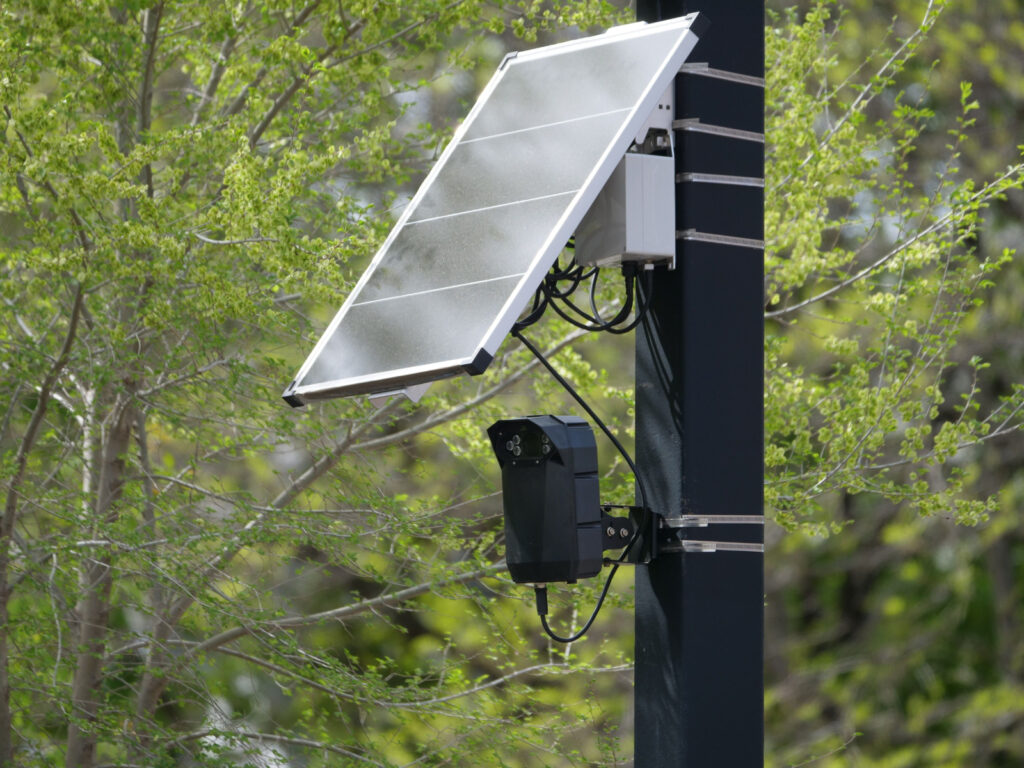
Much of the complaint filed last month by William Freeman and Gwen Steel alleges that the Boulder Police Department’s use of Flock automated license plate readers (ALPRs) amounts to “warrantless, suspicionless, dragnet surveillance” of every vehicle in the city. It also argues that “the public has a legitimate and compelling interest in knowing how law enforcement deploys mass surveillance against the community it serves.”
Last December, Freeman used the Colorado Criminal Justice Records Act to request all images and associated metadata captured by Boulder’s Flock system depicting the vehicle he drives for the period the records are retained. His request sought “only raw images of my vehicle and related metadata, not analytics or investigative records.”
Dawn VanAckeren, Boulder PD’s records supervisor, responded that searching for the records would violate department policy and “contractual obligations” regarding the use of Flock data. “Our systems may only be accessed for law enforcement purposes as part of documented criminal investigations,” she wrote.
Freeman pushed back, pointing out that Harris v. Denver Post, decided by the Colorado Supreme Court in 2005, requires records custodians to balance various factors, including any privacy interests and the public interest, before denying access under CCJRA. “Your contractual obligations with Flock Safety cannot create restrictions beyond what the statute permits,” he wrote.
“We are not denying your request,” VanAckeren told Freeman, “we are advising that the City does not possess responsive documents.”
Freeman’s lawsuit, prepared by civil rights attorney Andy McNulty, notes that ALPR records exist regardless of whether a query has been run. “Flock automatically captures and retains images when vehicles pass the cameras, and those records are maintained for a defined retention period under Boulder PD’s control,” it says, adding that “an agency cannot avoid its CCJRA obligations by declining to access a database it owns and controls.”
The lawsuit says Freeman “has a significant personal interest in inspecting” the Flock images he requested. It alleges VanAckeren abused her discretion under CCJRA by failing to consider “the public’s interest in the transparency of mass surveillance technologies deployed against the community” and that Freeman’s privacy interests are minimal “as he is requesting images of his own vehicle.”
“In none of her responses did Defendant VanAckeren balance the factors identified by the Colorado Supreme Court in Harris or engage in a factor-by-factor analysis of Mr. Freeman’s request,” McNulty wrote. “Defendant VanAckeren did not articulate or consider the public’s interest in the disclosure of ALPR data, did not consider the lack of privacy concerns, and did not consider release of redacted records that would satisfy the CCJRA’s objectives of disclosure. Instead, Defendant VanAckeren blanketly denied Mr. Freeman’s access to criminal justice records in their entirety based on an alleged provision in the city’s contract with Flock.”
In a July 29 motion to dismiss the lawsuit, city of Boulder senior counsel Luis Toro maintains that CCJRA “does not require custodians to generate a record for release.” Toro cited a 1999 Colorado Supreme Court ruling that criminal justice agencies are not required to “manipulate data upon request for inspection.”
“The CCJRA did not require Ms. VanAckeren to honor Mr. Freeman’s request that she query the Flock database for the vehicle he claims is his, review the results, segregate any data related to an active criminal investigation (if any), and make that newly created record available to him for inspection and copying,” the motion says.
The contract between Boulder and Flock, Toro wrote, “did not purport to transfer ownership of Flock data to Boulder as against the rest of the world.” The contract “expressly restricted Boulder from searching the Flock database except ‘to facilitate gathering evidence that could be useful in a lawful criminal investigation.’ Boulder had no contractual right to query the database for any other reason.”
In 2025, a judge in Skagit County, WA, found that Flock’s contract with two cities made images “generated off Flock cameras” the property of those cities. The images, the judge ruled, were public records under the Washington State Public Records Act and not exempt from disclosure. A judge in Snohomish County, WA, made a similar finding; however, a judge in Pierce County, WA, ruled the opposite way, according to The Daily Herald in Everett.
The Washington legislature earlier this year exempted automated license plate reader data from disclosure under the state’s public records law.
Follow the Colorado Freedom of Information Coalition on X and Bluesky. Like CFOIC’s Facebook page. Do you appreciate the information and resources provided by CFOIC? Please consider making a tax-deductible donation.