
Judge: State law protects privacy of those who ask for library books to be banned or reclassified
People who ask Gunnison County librarians to remove or reclassify books they find objectionable or controversial can remain anonymous, a judge decided.
People who ask Gunnison County librarians to remove or reclassify books they find objectionable or controversial can remain anonymous, a judge decided.

For those concerned about access to government records in Colorado, the 2022 legislative session was notable for what didn’t happen — the introduction of a bill addressing frustrating issues such as expensive fees, email retention and slow responses by law enforcement agencies.

The Colorado Freedom of Information Coalition and other organizations are asking the state’s highest court to review an appellate court ruling that, if allowed to stand, will impact the First Amendment rights of lawyers to make statements about public-interest litigation.
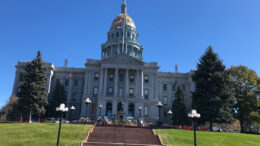
The 2021 Colorado legislative session produced a mixed bag of good and not-so-good developments for those concerned about government transparency.

Homeowners’ associations could not ban signs and flags based on their content or message under a bill making its way through the Colorado General Assembly.

Legislation creating an online media-literacy resource bank for Colorado public schools appears close to passing the General Assembly over the objections of some Republicans who say the measure is a governmental intrusion on free speech.
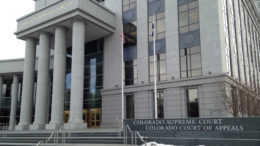
Colorado Freedom of Information Coalition president Steve Zansberg and Denver Post investigative reporter David Migoya are co-recipients of this year’s First Amendment Award from the Society of Professional Journalists’ Colorado Pro Chapter for work that prompted a new statewide standard for sealing and suppressing criminal court records.
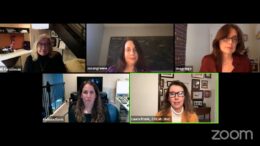
The Colorado Freedom of Information Coalition presented its highest honor, the Jean Otto Friend of Freedom Award, to the founders of the Colorado News Collaborative, an innovative local media resource hub that is helping to strengthen local journalism statewide.

A bill “intended to spark conversation” about the power of digital communications platforms emerged from a Colorado Senate committee Tuesday with language requiring a study of how state lawmakers might address online consumer issues including privacy, the spread of disinformation and the promotion of violence.
The indisputably terrible, horrible, no good, very bad year 2020 ended with at least one bright spot in Colorado: On Dec. 17, the state Supreme Court formally adopted a new Rule of Criminal Procedure (Colo.R.Cr.P. 55.1) that sets both procedural and substantive standards for when a trial judge may “suppress” judicial records on file in criminal cases.