By Jeffrey A. Roberts
CFOIC Executive Director
A judge Wednesday ordered the Colorado Energy and Carbon Management Commission to publicly disclose an advisory committee’s draft report, ruling it is not protected by CORA’s deliberative process privilege.
“The four pages of the White Paper were improperly withheld,” wrote Denver District Court Judge Heidi Kutcher, siding with plaintiff Brad Klafehn, an environmentalist who sued the commission in August for denying him access to meetings and records of its Biological Resources Working Group.
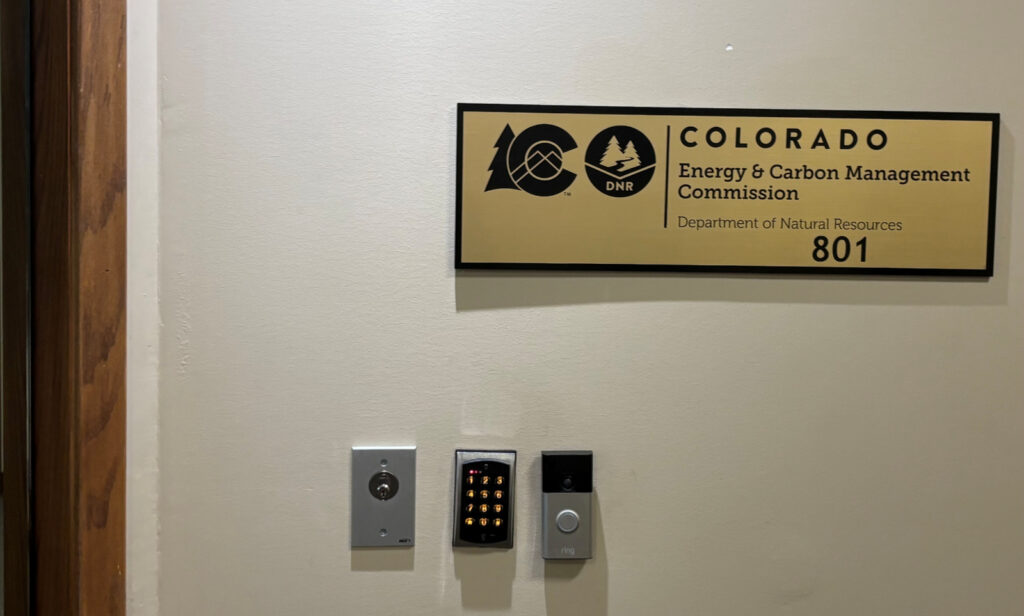
The working group is developing recommendations about “the regulation and protection of invertebrates and rare plants.” The commission provided Klafehn with some records about its activities but withheld a “Biological Working Group 2.0 White Paper,” citing the deliberative process privilege. Records custodians assert this Colorado Open Records Act exemption when they claim requested “material is so candid or personal that public disclosure is likely to stifle honest and frank discussion within the government.”
The commission contended the white paper is “pre-decisional.” A privilege log says the document “discusses legislative and regulatory background and history regarding protection of invertebrates and rare plants from the impacts of oil and gas operations. The document also discusses pre-decisional options related to the composition of the Biological Resources Working Group and pre-decisional and tentative plans for the working group, including logistics and possible stakeholder engagement.”
But after reviewing the document in camera, Kutcher found it “is not deliberative in nature” and that “disclosure would not chill honest and frank communications in the future.”
The white paper, she wrote, contains information such as a legislative history of the Colorado Oil and Gas Conservation Act and “factual developments” related to new legislation and subsequent rulemaking. It describes how the working group should meet, how stakeholder updates may occur and contents for its website.
“Nothing in the White Paper indicates opinions, recommendations between government officials (no give and take), or that a decision would result from the White Paper,” the judge added.
Kutcher’s order says the commission may redact personal contact information not disclosed on the working group’s website for non-employee individuals mentioned in the report as well as for another person who isn’t part of the working group.
The judge also decided the commission isn’t required to create working group meeting minutes requested by Klafehn, although he didn’t ask the commission to do so. The commission claims that no minutes were taken.
Still pending is a ruling on Klafehn’s allegation that the commission violated the Colorado Open Meetings Law by denying his request to observe working group meetings. The commissioners told him the working group “is not a state public body” even though the statute includes “advisory” bodies in its definition of state public bodies subject to the law’s provisions.
Klafehn’s complaint notes that state public bodies — including advisory boards — must open meetings of two or more members at which public business is discussed, provide advance notice to the public and take minutes, which are open for public inspection
Klafehn is represented by attorney Eric Maxfield, a board member of the Colorado Freedom of Information Coalition.
Follow the Colorado Freedom of Information Coalition on X and Bluesky. Like CFOIC’s Facebook page. Do you appreciate the information and resources provided by CFOIC? Please consider making a tax-deductible donation.