By Jeffrey A. Roberts
CFOIC Executive Director
Five years after The Colorado Sun and 9NEWS sued the state Department of Human Services, the Colorado Supreme Court on Monday ordered the agency to disclose to the news organizations aggregate child-abuse hotline statistics from three residential care facilities.
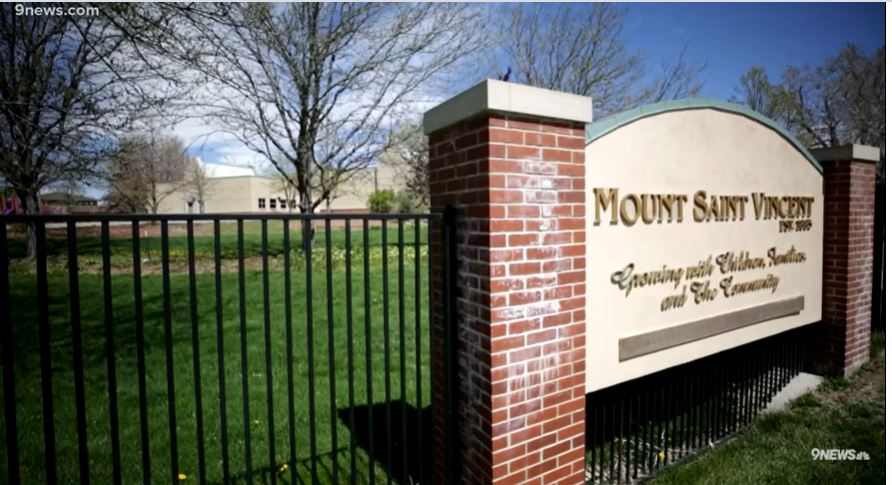
CDHS contended the information could be used to identify individual informants, children or family members — in violation of a confidentiality provision in the Colorado Children’s Code Records and Information Act — because the street addresses of the Tennyson Center, Mount Saint Vincent and Cleo Wallace facilities are publicly known. It also claimed the requested numbers would confirm that a report of child abuse or neglect originated from one of the RCCFs.
But in a majority ruling authored by Justice Carlos Samour, Jr., the Supreme Court determined the 1977 privacy statute does not prohibit the release of the “six cardinal numbers” requested by The Sun and 9NEWs under the Colorado Open Records Act: 1) the total number of reports of child abuse or neglect made from each facility over a three-year period and 2) the number of those reports from each facility that were screened in for investigation.
“CDHS’s approach would hinder, if not altogether eliminate, oversight of state-funded residential facilities for children,” Samour wrote. “All information, including a cardinal number, in any way related to a report of child abuse or neglect originating from an RCCF [residential child care facility] would presumably be out of bounds because it would confirm that such a report was made from the particular RCCF’s address.”
“We are aware of no evidence, and CDHS presents none, that this is what the legislature intended. To the contrary, our legislature has told us loud and clear that Colorado favors transparency,” the ruling adds, citing the famous 1913 quote from U.S. Supreme Court Justice Louis Brandeis: “[S]unlight is said to be the best of disinfectants; electric light the most efficient policeman.”
“When it enacted CORA,” Samour wrote, “our General Assembly appeared to heed Justice Brandeis’s pearls of wisdom, choosing sunlight as Colorado’s disinfectant and electric light as Colorado’s police officer.”
The Children’s Code says that “reports of child abuse or neglect and the name and address of any child, family, or informant or any other identifying information contained in such reports shall be confidential and shall not be public information.”
Addressing CDHS’s arguments that disclosing the numbers would effectively make public the address of any child, family, or informant, Samour wrote, “How can the requested disclosures make public what is already public? That’s no more possible than making public the information found in a book already sitting on a library shelf … These are public facilities with publicly accessible addresses. It would strain logic to pretend that the addresses of these RCCFs aren’t already public.”
Regarding the agency’s argument that disclosure would confirm the existence of a report of abuse or neglect from a particular RCCF, the Supreme Court’s ruling says the statute “does not bar the confirmation of an already public address contained in such a report.”
Monday’s decision stems from 2021 reporting by The Sun and 9NEWS that focused on failings of the system that is supposed to protect and treat vulnerable foster children and youths with severe mental health issues.
In September 2021, Denver District Court Judge Darryl Shockley dismissed the news organizations’ lawsuit, which was filed by media attorney and Colorado Freedom of Information Coalition president Steve Zansberg. Because the street addresses of Mount St. Vincent, Cleo Wallace and Tennyson Center are publicly known, Shockley said it might be possible — “put together with other information” — to identify a specific caller from a facility.
A Court of Appeals panel reversed that ruling, saying the statute “prohibits the disclosure of an address only if it constitutes identifying information.” The appellate judges told the district court to “determine whether … the requested records would disclose ‘identifying information’ of a child, family, or informant associated with a child abuse or neglect report.”
Instead, the Supreme Court granted CDHS’ petition to review the case.
A separate opinion, issued Monday by Justice Maria Berkenkotter and signed by Justice William Hood and Chief Justice Monica Márquez, favored the district court’s decision.
Nothing about the language in the Children’s Code “supports the majority’s notions regarding addresses that are ‘already public’ or cardinal numbers,” Berkenkotter wrote, adding that the ruling “has the potential to cause great harm to victims, families, and informants.”
“Questions will inevitably arise about how far the majority’s rationale extends,” the minority opinion says. “If it is applied to victims of abuse or neglect, those victims may lose their protection under the statute if their names have already been made public, so long as the CORA request purports to be limited to the cardinal number of reports regarding the victim. Releasing information about the number of times a victim’s name appears in reports of abuse or neglect hardly aligns with the General Assembly’s intent to protect victims.”
Follow the Colorado Freedom of Information Coalition on X and Bluesky. Like CFOIC’s Facebook page. Do you appreciate the information and resources provided by CFOIC? Please consider making a tax-deductible donation.