CFOIC’s holiday wish list
All we want for Hanukkah/Christmas/Kwanzaa (besides world peace, an end to the pandemic and less partisan rancor) are better open-government laws for Coloradans.
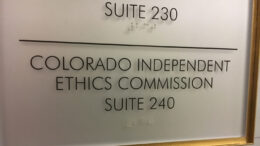
Neither the Colorado Open Records Act nor the Colorado Open Meetings Law applies to the constitutionally created state commission that investigates allegations of ethical misconduct involving public officials, the Colorado Court of Appeals has ruled.
This may come as a surprise to Coloradans who have been quoted hundreds or thousands of dollars by cities, state agencies, school districts and other government entities for “research and retrieval” in response to their public records requests: Not every state allows such charges.
We didn’t think our story would be an open-and-shut case. Neither did we expect such secrecy from a governmental branch whose purpose is to oversee the implementation of laws and enforce them.
Not only is a $50-per-record research fee not authorized in CORA, the building department’s public records policy makes no mention of providing a free hour to requesters. That is an “unequivocal violation of CORA,” said Steve Zansberg, a First Amendment lawyer and president of the Colorado Freedom of Information Coalition. The department’s justification for its research-and-retrieval fee is “simply lacking in any legal basis,” he added.
A former senior assistant attorney general for Colorado is making a case for a more transparent state system of regulating the legal profession. Comments submitted by Paul Chessin this month to the Colorado Supreme Court call for public disclosure to be “the rule, not the exception.”
Boulder Beat has asked a judge to decide whether a Boulder City Council member’s personal email exchanges with two nonprofits are public records subject to disclosure under the Colorado Open Records Act.
A Colorado Springs school board improperly denied a parent’s Colorado Open Records Act request for the names and application materials of all finalists considered for the superintendent’s job, a judge ruled this week in a case similar to the Boulder Daily Camera’s successful lawsuit against the University of Colorado regents.
A lawsuit filed by a Colorado State University journalism student alleges the Larimer County coroner wrongfully denied her Colorado Open Records Act request for the autopsy report on a 65-year-old man who was shot to death on a Loveland street corner in 2015.
An audit finds fault with the city of Denver’s process for complying with open records requests, calling it “not as accessible or transparent as other Colorado governments.”