By Jeffrey A. Roberts
CFOIC Executive Director
A lawsuit accuses the Colorado Energy and Carbon Management Commission of violating the state’s open meetings and open records laws by denying public access to a commission-appointed advisory committee and by withholding the committee’s draft report.
Brad Klafehn, an environmentalist, asked in January to observe meetings of the commission’s Biological Resources Working Group, established to develop recommendations about “the regulation and protection of invertebrates and rare plants.”
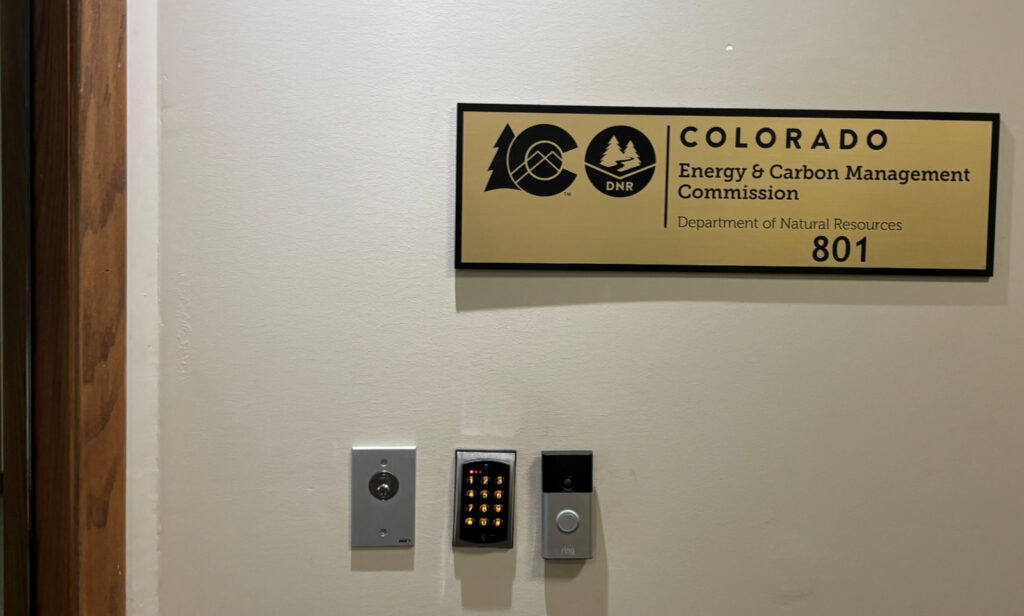
Commissioners denied his request, telling Klafehn the working group “is not a state public body” under the Colorado Open Meetings Law, even though the statute includes “advisory” bodies in its definition of state public bodies subject to the law’s provisions.
Klafehn’s complaint, filed in Denver District Court last week, notes that state public bodies — including advisory boards — must open meetings of two or more members at which public business is discussed, provide advance notice to the public and take minutes, which are open for public inspection.
Public access to the 15-member working group “is being determined ad hoc” by the Energy and Carbon Management Commission “and without regard for the requirements of the Colorado Open Meetings Law,” says the lawsuit, drafted by attorney Eric Maxfield, a board member of the Colorado Freedom of Information Coalition. “Meetings of formally constituted advisory groups of this sort are precisely the type of deliberations that the Sunshine Act requires be open to the public,” it adds.
Klafehn addressed the commissioners during the public comment portion of their Jan. 28 meeting. Commission chair Jeff Robbins told him the open meetings law doesn’t apply to the working group because it involves only one commissioner, not two or more, and no decisions are made during meetings. Benjamin Boudreaux, the senior assistant attorney general who advises the commission, expressed agreement with his assessment.
“We’re just trying to work through issues. We have a number of working groups, and this is the approach we’ve taken,” Robbins said. “It allows us to have commissioners bring subject-matter expertise individually to different topics … It is not, in any manner, a means to be non-transparent. It’s a matter of trying to get things done and then bring it back to the commission for full meetings and full public participation.”
The commission provided some records about the working group to Klafehn but withheld a draft “Biological Working Group 2.0 White Paper,” citing the deliberative process privilege exemption in the Colorado Open Records Act. Records custodians assert the privilege when they claim requested “material is so candid or personal that public disclosure is likely to stifle honest and frank discussion within the government.”
In a privilege log provided to Klafehn and Maxfield, the commission asserts the draft white paper is “pre-decisional.” It says, “The document discusses legislative and regulatory background and history regarding protection of invertebrates and rare plants from the impacts of oil and gas operations. The document also discusses pre-decisional options related to the composition of the Biological Resources Working Group and pre-decisional and tentative plans for the working group, including logistics and possible stakeholder engagement.”
The lawsuit notes that Robbins, at the Jan. 28 commission meeting, said, “No decisions are being made by the working group.”
“If no decisions are being made by the group, documents generated by Commissioners for the Working Group cannot be withheld by being labeled ‘pre-decisional,’” it contends.
The commission and working group also did not provide minutes of working group meetings to Klafehn. “[T]here are no minutes,” Boudreaux told Maxfield in a May 5 letter.
Follow the Colorado Freedom of Information Coalition on X and Bluesky. Like CFOIC’s Facebook page. Do you appreciate the information and resources provided by CFOIC? Please consider making a tax-deductible donation.