By Jeffrey A. Roberts
CFOIC Executive Director
A bipartisan bill in the Colorado legislature is aimed at making sure the public regains access to records used by 9NEWS to show errors in the way the state screens the risk levels of parolees.
The Colorado Department of Corrections stopped providing the risk-assessment documents to the news organization in January, not long after Gov. Jared Polis credited 9NEWS for exposing the systemic problem and saying, “It needs to be fixed with great urgency.”
The agency cited “copyright protections” as the reason, even though the creator of the assessment tool, the University of Cincinnati Corrections Institute, posts online a blank copy of what’s known as the Ohio Risk Assessment System.
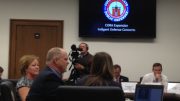
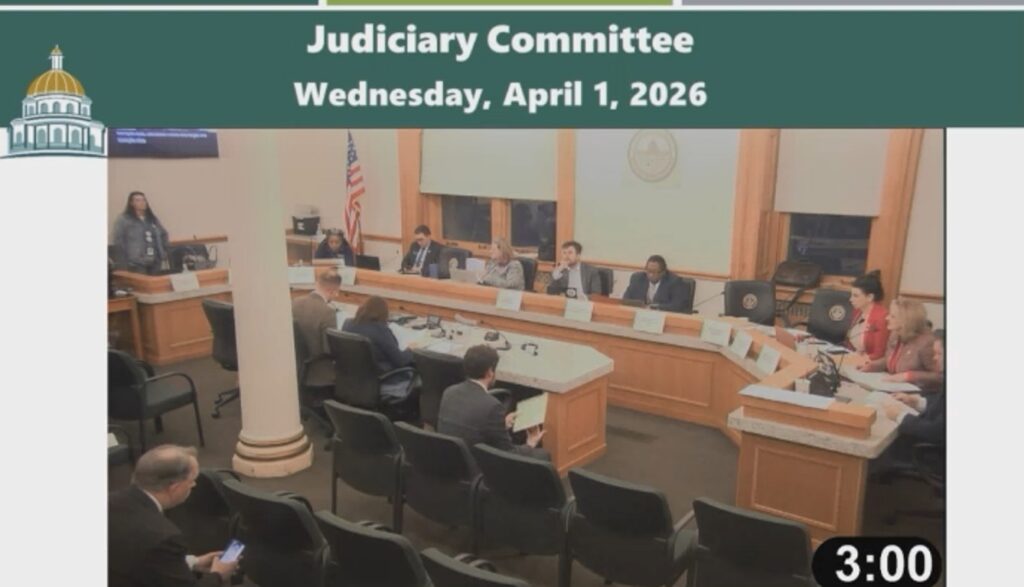
“Because this error was discovered by a reporter and it was confirmed by legislators, all using the criminal justice open records act, it would seem mind-boggling to now close off that ability,” said Rep. Matt Soper, a Delta Republican, during a House Judiciary Committee hearing last week. “It was non-government actors who first discovered that the government had a problem, and we should encourage that in the future.”
Soper and Rep. Cecelia Espenoza, D-Denver, are the sponsors of House Bill 26-1315, which as amended by the committee declares: “It is the general assembly’s intent to keep these records open to the public to hold governmental actors accountable.” The measure includes risk assessments in the definition of “criminal justice records” in the Colorado Criminal Justice Records Act (CCJRA).
During 2025, 9NEWS investigative reporter Chris Vanderveen requested and received dozens of risk assessments and risk scores from DOC. He uncovered widespread mistakes on the assessment records of parolees, including some later accused of or convicted of high-profile and violent crimes. When DOC reviewed the assessments of about 8,000 parolees, nearly 98% contained errors.
“In some instances, the errors identified by 9NEWS left parolees free to reoffend with little to no oversight in the weeks and months prior to the crimes,” says a Dec. 18 story by Vanderveen and photojournalist Chris Hansen. “One of those parolees, Ricky Lee Roybal-Smith, is now linked to three murders over the course of a roughly 26-hour span over the summer.”
Soper said neither the right nor the left “want to see errors in risk assessments. We want to be able to appropriately supervise people, but we also want to make sure that if someone is in a place where we can get them released — knowing that our prisons are at capacity — we should be able to have confidence in our risk assessments, to be able to know that our DOC is going to be able to make those releases possible.”
James Karbach, director of legislative policy and external communications for the Office of the State Public Defender, said it’s not just legislators and journalists who are interested in knowing whether risk assessments are flawed. The public defender’s clients “need to figure out if they’re making clemency applications or parole applications or special needs parole applications, if it’s being calculated correctly,” he told lawmakers. “And if it’s not, they have an interest in visibility to get that corrected because they shouldn’t stay in prison on a wrongful risk calculation any more than people should get out of prison because of a wrongful one.”
Under the bill, DOC will be required each January to report to legislators data that includes “the total number of risk assessments that contained inaccurate or inconsistent information that resulted in an inaccurate supervision level.”
The Colorado Freedom of Information Coalition worked to remove a proposed provision in HB 26-1315 that would have required a journalist or any other person interested in reviewing assessments to sign a nondisclosure agreement prohibiting them from publishing any information from the records.
CFOIC urged the committee make risk assessments “records of official action” under the CCJRA, ensuring their unrestricted release to the public. Criminal justice records that are not records of official action potentially could be withheld if an agency determines that disclosure would be “contrary to the public interest.”
The committee voted 11-0 to send HB 26-1315 to the House Appropriations Committee.
Follow the Colorado Freedom of Information Coalition on X and Bluesky. Like CFOIC’s Facebook page. Do you appreciate the information and resources provided by CFOIC? Please consider making a tax-deductible donation.