By Jeffrey A. Roberts
CFOIC Executive Director
The Colorado Supreme Court will examine whether state statutes require community parole officers to wear body-worn cameras during warrantless searches of parolees’ homes.
Fourth Judicial District Attorney Michael Allen asked the justices to consider the issue in a case concerning Rodney Mobley, a parolee who lives in Colorado Springs.
Parole officers forcibly entered Mobley’s apartment in April 2025 to determine if he was violating his parole by possessing weapons or using drugs. According to court documents, they found him inside and also found a loaded semi-automatic pistol, drug paraphernalia and methamphetamine.
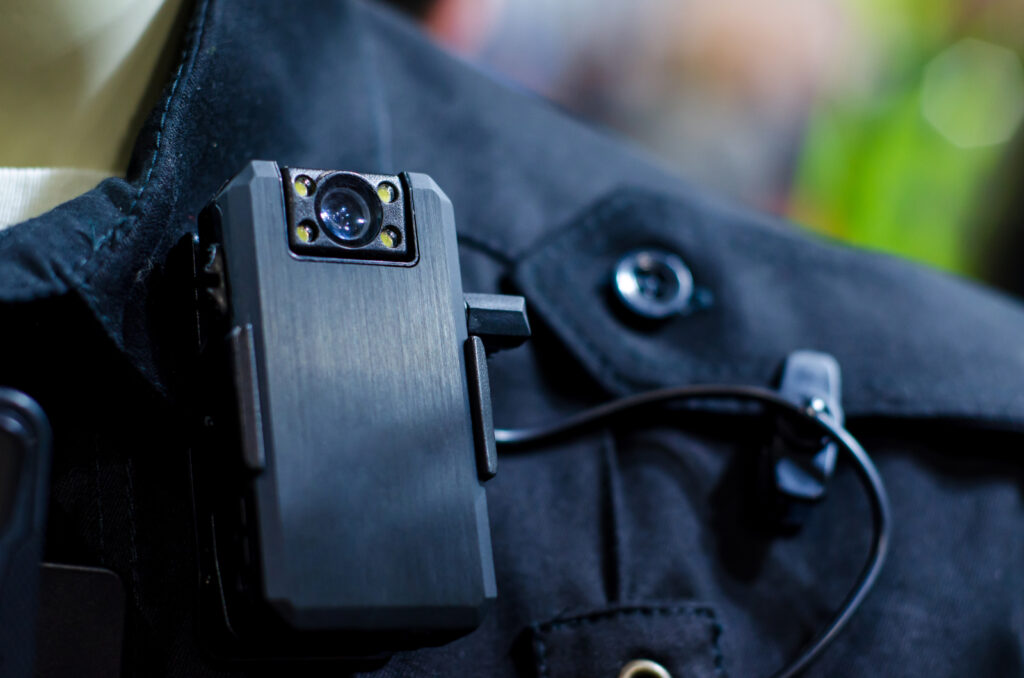
El Paso County District Court Judge Hilary Gurney granted Mobley’s motion to suppress all evidence collected during the search because the parole officers did not follow a directive in C.R.S. § 16-3-312(1) that peace officers must wear and activate a body-worn camera when making “a warrantless entry into a dwelling in which occupants are unaware law enforcement is present.” The parole officers also failed to comply with another statute, the judge found, because they did not notify local law enforcement officers who could have recorded the incident.
Gurney acknowledged that parole officers are not “peace officers” as defined by C.R.S. § 24-31-902(3) in the Law Enforcement Integrity Act and, therefore, “do not have a broad obligation to wear and activate body-worn cameras.” However, “[w]arrantless entry into a dwelling when occupants are unaware that law enforcement is present and making entry creates a stressful and chaotic situation for all involved,” the judge wrote. “For these reasons, the General Assembly clearly intended to expand the body-worn camera usage beyond the scope of what was covered in C.R.S. § 24-31-902(1)(a)(II)(A) to include all peace officers and require the use of body-worn cameras in these situations.”
“But that conclusion is not shared by the Colorado Department of Corrections, which does not issue body-worn cameras to community parole officers, even though those officers are authorized to make warrantless entries into parolees’ homes,” Allen and Senior Deputy District Attorney Doyle Baker wrote in a petition to the Supreme Court.
“The court’s conclusion appears to be erroneous,” they added, “given that nothing in section 24-31-902 requires the department of corrections to provide community parole officers with body-worn cameras.”
Peace officer in the LEIA “means any person employed by a political subdivision of the state required to be certified” by the Peace Office Standards and Training (POST) board as well as a Colorado state patrol officer and a noncertified deputy sheriff. Community parole officers are not employees of a political subdivision such as a city, county or school district, Allen’s petition says.
“The structure and specific provisions of section 24-31-902 demonstrate that the statute is directed exclusively at local law enforcement agencies and the Colorado state patrol,” it adds. “It follows that the statute’s body-worn camera requirement should not apply to community parole officers employed by the DOC.”
The Supreme Court gave Mobley until Dec. 4 to show why it should not reverse Gurney’s order.
Follow the Colorado Freedom of Information Coalition on X and Bluesky. Like CFOIC’s Facebook page. Do you appreciate the information and resources provided by CFOIC? Please consider making a tax-deductible donation.