By Jeffrey A. Roberts
CFOIC Executive Director
State lawmakers Thursday narrowly defeated a bill that would have given state and local government entities up to three weeks to fulfill many requests made under the Colorado Open Records Act.
Senate Bill 26-107, sponsored by Sen. Cathy Kipp, D-Fort Collins, and Sen. Janice Rich, R-Grand Junction, died on a 3-2 vote in the Senate State, Veterans & Military Affairs Committee. It was the third consecutive year Kipp has introduced bills to give records custodians five working days, rather than three, to fulfill requests and an additional 10 working days, rather than seven, if “extenuating circumstances” exist.
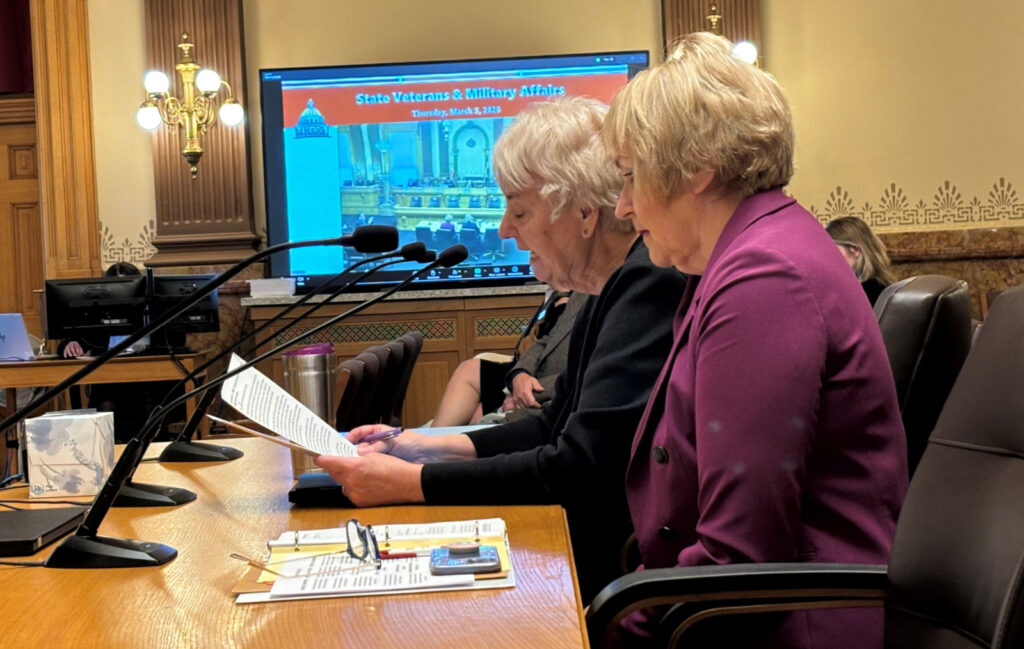
“I believe that the government should provide transparency and accountability every chance it gets to its people,” said the committee’s chairperson, Sen. Katie Wallace, D-Longmont, before casting a no vote. “When governments start hiding or even appearing to hide, it’s a bad thing for representative democracy.”
Kipp called her measure “balanced” and said it was “not an attack on open records. It is an attempt to make the system work better for everyone.”
Multiple representatives of government entities and government associations testified in favor of SB 26-107, saying it was needed because they are dealing with a rising number of CORA requests. Colleen O’Neil, deputy executive director of the Colorado Association of School Executives, said “CORA compliance is incredibly cumbersome for our schools. The volume and complexity of records requests consumes significant staff time, and honestly, it pulls resources away from our mission of educating students.”
But the Colorado Freedom of Information Coalition argued that CORA requesters should not face additional barriers to obtaining public records when they frequently deal with delays, exorbitant fees and misapplied exemptions in the law. There is no need for the bill, we said, because not a single court has held a custodian of CORA records liable for not complying with the response deadline.
“This bill would further extend response timelines and make it even more difficult for the public to obtain timely access to government records at a time when transparency plays an important role in maintaining public trust,” testified Eric Maxfield, an attorney who serves on CFOIC’s board of directors.
SB 26-107 was nearly identical to a measure vetoed last year by Gov. Jared Polis. A major difference: This year’s bill did not exempt a “newsperson,” as defined by Colorado’s press shield law, from extended CORA response deadlines.
Several journalists testified against the 2026 measure, including Denver Post managing editor Matt Sebastian, Colorado Public Radio investigative editor Chuck Murphy, KOAA investigative reporter Alasyn Zimmerman and recently retired Denver7 investigative reporter Tony Kovaleski.
Kovaleski said public records requests were “the foundation” of his reporting about claims of a toxic culture in the Cherry Creek schools. “There was game-playing that went on, there were costs, there were delays. They used the system to delay accountability,” he testified.
Several members of the public also testified against the bill. Kristin Dallison, a former Bayfield town trustee, talked about how high fees already make it difficult for the public to obtain records.
“CORA should protect the public’s right to know, not protect the government from scrutiny,” she said.
SB 26-107 also would have let governments treat multiple requests — “pertaining to facially similar content” made by the same person within 14 days — as one request, ensuring the requester got only one free hour before research-and-retrieval charges kick in.
Kipp and Rich included some provisions in the bill that would have benefited requesters, but CFOIC pointed out there was no mechanism to enforce them.
It would have required government entities to post on their websites rules and policies about how to make CORA requests as well as their records retention policies. And if a requester asked, a custodian would have been required to provide “a reasonable break-down of costs that comprises the fee charged for research and retrieval of public records.”
This year’s version also included a penalty provision for records custodians: A custodian who failed to respond to a CORA request within the required time period would have been required to “provide the requester with one additional hour of research and retrieval time without charge for each calendar day, or portion thereof, that the response is late.” (CORA currently requires one free hour before a maximum hourly rate of $41.37 can be charged.)
A lobbyist for the Colorado Municipal League testified in opposition to that provision, saying it would “lead to confusion and disputes over costs.” CFOIC was concerned that records custodians already have so much control over fees, a free-hour penalty wouldn’t mean much.
Polis rejected the 2025 legislation because it created “three classes of open records requests that are subject to different timelines: those made by mass media, those made for pecuniary gain, and all other requests.” His veto message added, “It would certainly be convenient for the Executive Branch to agree to weaken CORA, but as a representative for the people of Colorado, I support more, not less, openness and transparency.”
The 2026 bill would have let governments take up to 30 working days to fulfill requests made “for the direct solicitation of business for pecuniary gain” and charge a “reasonable cost” — rather than the maximum hourly rate in CORA — to do so. Kipp said she was willing to remove that provision “for one reason only — the governor has indicated he will veto the bill if this provision remains in it.”
Follow the Colorado Freedom of Information Coalition on X and Bluesky. Like CFOIC’s Facebook page. Do you appreciate the information and resources provided by CFOIC? Please consider making a tax-deductible donation.