
CFOIC’s holiday wish list
All we want for Hanukkah/Christmas/Kwanzaa (besides world peace, an end to the pandemic and less partisan rancor) are better open-government laws for Coloradans.
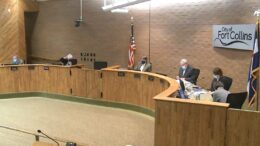
When the Fort Collins City Council went into an executive session Oct. 20, the announced purpose was to discuss “broadband issues,” a topic not expressly authorized in the Colorado Open Meetings Law for closed-door deliberations.
This may come as a surprise to Coloradans who have been quoted hundreds or thousands of dollars by cities, state agencies, school districts and other government entities for “research and retrieval” in response to their public records requests: Not every state allows such charges.
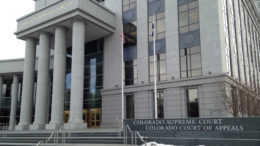
The Colorado Supreme Court moved closer to possibly adopting a statewide standard for guiding judges’ decisions to seal or suppress court records in criminal cases.
Not only is a $50-per-record research fee not authorized in CORA, the building department’s public records policy makes no mention of providing a free hour to requesters. That is an “unequivocal violation of CORA,” said Steve Zansberg, a First Amendment lawyer and president of the Colorado Freedom of Information Coalition. The department’s justification for its research-and-retrieval fee is “simply lacking in any legal basis,” he added.
Is it legal for a Colorado school board to select finalists for a superintendent’s job while meeting behind closed doors?
One positive development in the current historical moment is the growing awareness and recognition – by citizens, legislators, governors, mayors, and even police chiefs – that there can be little or no public trust, a necessary foundation of effective law enforcement, without both accountability and transparency.
In a precedent-setting ruling, the Colorado Court of Appeals determined that Basalt town councilors violated the Colorado Open Meetings Law by convening four executive sessions to discuss legal and personnel matters without telling the public specifically what they would be talking about.
Because of the coronavirus pandemic, the Colorado Supreme Court will wait until September to convene a public hearing on a long-awaited standard for guiding judges’ decisions to seal or suppress judicial records in criminal cases. In the meantime, the Colorado Freedom of Information Coalition and other groups have submitted written comments on the proposal.
Some government entities in Colorado are delaying responses to public records requests because of the coronavirus pandemic, but the disruption of day-to-day transparency obligations so far doesn’t seem as severe here as in other parts of the country.