By Jeffrey A. Roberts
CFOIC Executive Director
The Office of the State Public Defender is not a criminal justice agency, the Colorado Court of Appeals ruled Thursday, reversing a district court order that prison inmate Eric St. George be paid $13,650 in penalties because the agency withheld a document from him.
In January 2025, Jefferson County District Court Judge Todd Vriesman determined that the public defender’s regional office in Golden abused its discretion under the Colorado Criminal Justice Records Act (CCJRA) by not providing St. George with its official policy regarding whether discovery files can be kept from clients held in pre-trial detention.
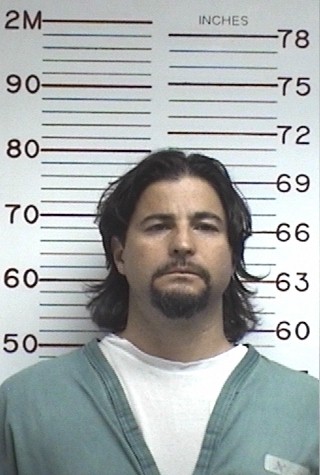
Vriesman calculated St. George was owed $25 a day for the 546 days that elapsed between his initial request for the record until the agency finally provided him with language from the policy the day after a hearing on his lawsuit.
But a three-judge appellate panel concluded “the district court erred by ruling that OSPD is a criminal justice agency under the CCJRA and imposing statutory penalties.” While the CCJRA allows per-day penalties for the “arbitrary and capricious” denial of records, OSPD says its records are governed by Rule 2 – Public Access to Information and Records (the judicial branch’s records rules, known as P.A.I.R.R. 2), which does not have a similar penalty provision.
St. George, who fired a shotgun at a Lakewood police officer in 2016 and is serving a 32-year sentence, asked the public defender’s office for the policy three times, according to the lawsuit he filed in 2023.
His attorney, Colorado Freedom of Information Coalition board member Madison Schaefer, argued that the definition of criminal justice records in the CCJRA broadly encompasses “records that are made, maintained or kept in the state for use in the exercise of functions required or authorized by law.” She cited the Court of Appeals’ 2023 opinion in Gazette v. Bourgerie, affirmed by the Colorado Supreme Court, that the Peace Officer Standards and Training board is criminal justice agency because it collects and stores arrest and criminal records as defined by the CCJRA.
But the Court of Appeals found that the state legislature amended CCJRA’s definition of a criminal justice agency in 1981 by removing the word “defense.”
“And in doing so, it didn’t remove the word ‘prosecution’ or make any other changes to the list of enumerated activities,” says the opinion, written by Judge Katharine Lum. “This revision clearly evinces an intent to exclude agencies — like OSPD — whose function is to defend criminal defendants.”
In arguing that P.A.I.R.R. 2, not the CCJRA, covers the public defender’s office, Assistant Attorney General Sarah Quigley cited a 2025 Court of Appeals opinion that P.A.I.R.R. 2 “provides no cause of action when all responsive records have been made available for inspection, even if the production of those records was delayed.”
Follow the Colorado Freedom of Information Coalition on X and Bluesky. Like CFOIC’s Facebook page. Do you appreciate the information and resources provided by CFOIC? Please consider making a tax-deductible donation.