By Jeffrey A. Roberts
CFOIC Executive Director
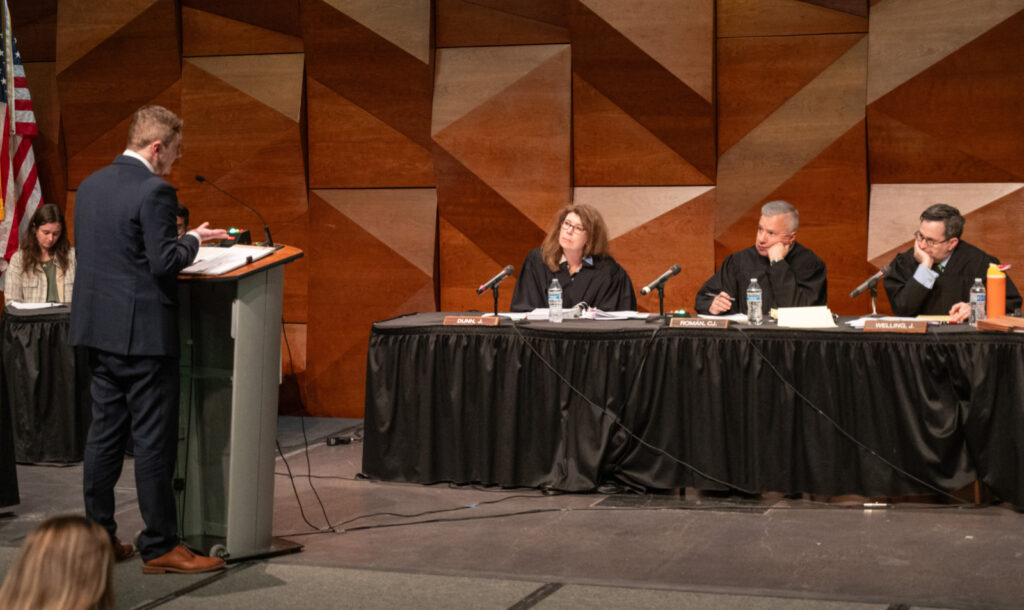
Colorado’s Law Enforcement Integrity Act does not permit agencies to charge fees as a condition of releasing body-worn camera footage depicting possible misconduct by police officers, the Colorado Court of Appeals decided Thursday.
Affirming a 2024 district court ruling, a three-judge appellate panel said the “conspicuous absence of a fee provision in the Integrity Act is telling.”
“After all, the General Assembly knows how to include a fee provision if it intends one because the CCJRA [Colorado Criminal Justice Records Act] plainly allows a criminal justice agency discretion to charge reasonable fees to review and produce criminal justice records.”
The underlying lawsuit concerns the shooting and killing of 51-year-old Jeanette Alatorre by Boulder police in 2023. The city required Yellow Scene Magazine to pay $2,857.50 before it would release bodycam footage of the incident, arguing that the video is still a criminal justice record subject to the CCJRA’s fee provision.
But the disclosure of footage under the Law Enforcement Integrity Act is mandatory when there is a complaint of police misconduct, the appellate judges noted. “The command is clear, plain, and unconditioned on the payment of fees.”
“We’ve set a state precedent,” Yellow Scene publisher Shavonne Blades told the Colorado Freedom of Information Coalition. “Municipalities can’t hide behind these fees any more to protect police misconduct. My hope is that there will be a domino effect in other states.”
“Today’s ruling reaffirms what should have been obvious to Boulder when this lawsuit was filed two years ago — police departments can’t use exorbitant fees to hide their officers’ misconduct behind a paywall,” said Matt Simonsen, the magazine’s attorney, in an emailed statement. Simonsen represents Yellow Scene along with attorneys Dan Williams and Ashlyn Hare.
Enacted in 2020 following the police killings of George Floyd in Minneapolis and Elijah McClain in Aurora, the Law Enforcement Integrity Act is separate from the CCJRA, which governs the release of most other criminal justice records.
Under the statute, all unedited video and audio recordings of incidents “in which there is a complaint of peace officer misconduct … through notice to the law enforcement agency involved in the alleged misconduct” must be released to the public no later than 21 days after a request is made. An agency can delay the release of video until 45 days from the date of an allegation of misconduct if the video “would substantially interfere with or jeopardize an active or ongoing investigation.”
The fee provision in the CCJRA doesn’t apply to the Integrity Act, Thursday’s opinion says, because the CCJRA limits the charging of fees to criminal justice records “requested pursuant to” the CCJRA. “Had the General Assembly intended for a fee provision to apply to any request for criminal justice records,” Judge Stephanie Dunn wrote for court, “it would not have amended the CCJRA in 2008 to expressly limit the fee provision to requests made under ‘this part 3’ in the statutes.”
“Because ‘this part 3’ refers only to the CCJRA, the fee provision on its face restricts its application to those requests for criminal justice records made under the CCJRA.”
The appeals court also rejected Boulder’s argument that that not allowing fees for footage under the Integrity Act would go against a 1991 law that makes state mandates optional unless the state reimburses local governments for their costs.
“[W]e don’t agree with Boulder that the unfunded mandate statute trumps the Integrity Act, rendering the mandatory obligation to produce requested recordings entirely optional,” Dunn wrote. “The opposite is true. That’s because the assumed lack of funding leaves the two statutes in irreconcilable conflict. This is so because the Integrity Act plainly requires disclosure of requested recordings, while the unfunded mandate statute says that compliance is optional when such a requirement is imposed without an accompanying state appropriation.”
“When faced with such an impasse, the Integrity Act — the more recent and specific of the two statutes — prevails over the older and more general unfunded mandate statute.”
The Colorado Freedom of Information Coalition and the American Civil Liberties Union of Colorado had submitted an amicus brief last July asking the Court of Appeals to affirm the district court’s ruling.
Follow the Colorado Freedom of Information Coalition on X and Bluesky. Like CFOIC’s Facebook page. Do you appreciate the information and resources provided by CFOIC? Please consider making a tax-deductible donation.