Update: HB 26-1134 passed the Colorado House on a 43-19 vote on Tuesday, March 3.
By Jeffrey A. Roberts
CFOIC Executive Director
A bill advancing in the state legislature would enhance transparency requirements for municipal courts and reinforce livestreaming mandates for all criminal courts in Colorado.
House Bill 26-1134 is similar to a measure that Gov. Jared Polis vetoed last year, citing provisions that addressed sentencing disparities between state and city courts. The new proposal doesn’t include those provisions because the Colorado Supreme Court ruled on the disparity issue in December.
Much of the revamped bill is aimed at municipal courts, such as the one in Montrose, that aren’t considered a “court of record — meaning it keeps no written, audio or visual recording of court proceedings,” according to a recent Denver Post article. “The public, civil rights organizations and members of the media cannot watch court hearings virtually, or access video after the fact, and cannot request any transcripts or audio of the day’s docket.”
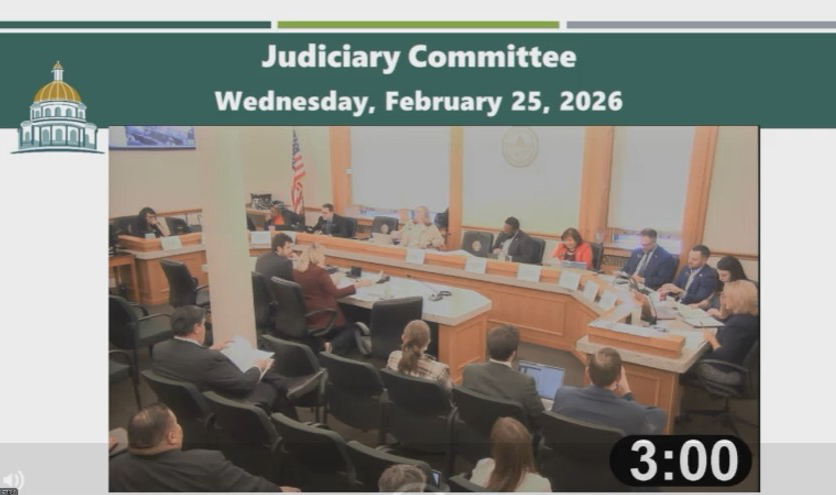
HB 26-1134, which passed the House Judiciary Committee on a 9-2 vote Wednesday, prohibits municipal courts that aren’t courts of record from sending people to jail. It also clarifies that defendants in municipal courts have a right to counsel, proceedings must be “accessible to any member of the public for public observation” and livestreamed proceedings are required when a defendant is charged with a municipal violation that could involve jail time.
“Too many municipal courts are not fully transparent in their proceedings,” said Rep. Javier Mabrey, D-Denver, who introduced the measure with Rep. Elizabeth Velasco, D-Glenwood Springs. “This bill has provisions to ensure that municipal courts at least approach state standards for transparency by requiring livestreaming of hearings of municipal defendants who are in custody.”
A state law enacted in 2023 says that all Colorado courts, including municipal courts, “shall make any criminal court proceeding conducted in open court available for remote public viewing and listening in real time, at no cost to the public, through an online platform.” It lists some exceptions such as when “[t]here is a reasonable likelihood remote observation of live proceedings risks compromising the safety of any person; the defendant’s right to a fair trial, including violations of sequestration orders; or the victim’s rights.”
HB 26-1134 makes it clear that provisions in the 2023 law “supersede any statute, judicial guidance, or chief justice directive limiting remote public observation of criminal courts.” That would include Chief Justice Directive 23-02, which established rules for the livestreaming of criminal court proceedings but did not — unlike the statute — presume that criminal trials and evidentiary hearings will be livestreamed.
“The supreme court may prescribe rules of procedure … to implement this section, but the rules must not narrow or conflict with the requirements of this section,” the bill adds.
A website administered by the Colorado Judicial Department shows which court proceedings around the state are being livestreamed.
The Denver Post reported last March that some judges still weren’t allowing livestreams of their courtrooms, despite the statutory requirement.
“The newspaper found that of the 374 courtrooms listed on the Colorado Judicial Department’s livestreaming website, 253 — 68% — livestreamed at least once during those point-in-time checks, which The Post did at different times of day,” the story says.
Follow the Colorado Freedom of Information Coalition on X and Bluesky. Like CFOIC’s Facebook page. Do you appreciate the information and resources provided by CFOIC? Please consider making a tax-deductible donation.