By Jeffrey A. Roberts
CFOIC Executive Director
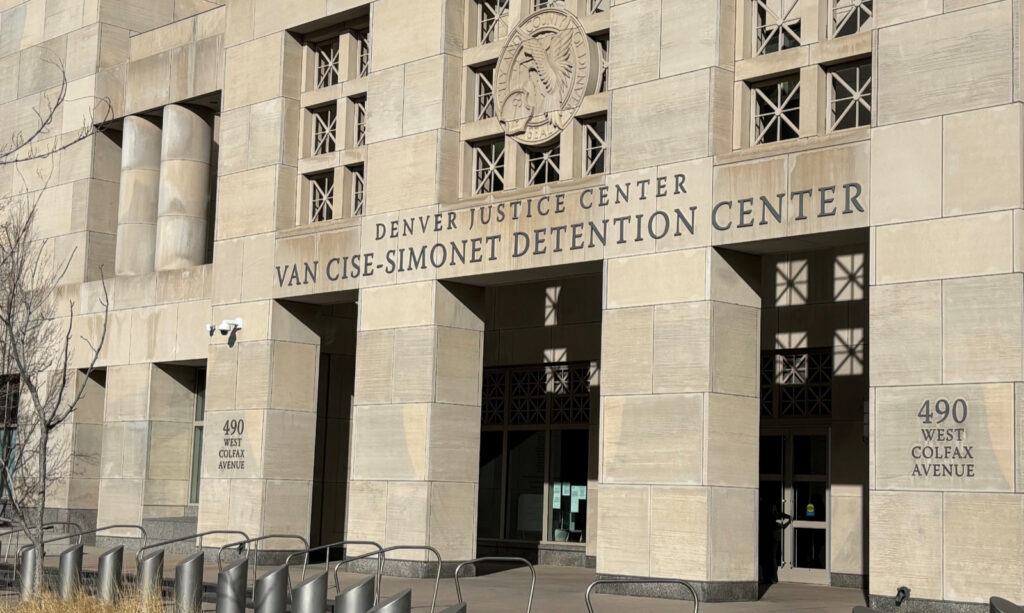
The mother of a 23-year-old woman who died in the downtown Denver jail won a ruling last week against a police department records custodian who repeatedly denied her requests for investigative documents about the death.
Successful lawsuits under the Colorado Criminal Justice Records Act are rare because law enforcement agencies have so much discretion to decide whether the disclosure of records would be “contrary to the public interest” — after balancing various factors required by case law.
But in an order issued Thursday, Denver District Court Judge Sarah Wallace found that Denver police “abused its discretion in failing to do the required balancing test” before records custodian Kathleen Phelan withheld records from Marisela Estrada.
“While DPD’s custodian of records testified she conducted a balancing test, there was no evidence in the records she did so,” Wallace wrote. “… There is zero evidence other than her self-serving testimony she did any balancing test.”
According to a lawsuit filed in December for Estrada by attorneys Felipe Bohnet-Gomez and Aria Vaughan, her daughter Jenifer Estrada died in custody at the detention center two days after her arrest on Feb. 23, 2025, “and after purportedly being medically cleared by Denver Health.”
“Many questions remain about Jenifer Estrada’s death — and much of the information that could provide answers remains the sole possession of DPD and other law enforcement agencies,” her complaint says.
But Estrada’s CCJRA requests were denied five times, according to the judge’s order, most recently on Dec. 10, 2025. Even though DPD had completed its own investigation, it again denied the request because the internal investigation of the Denver Sheriff’s Department was still “open.”
In a court filing, lawyers for Phelan wrote that “the public interest is served by not releasing information” from either the police investigation or the IA investigation “in order to prevent facts revealed in one investigation from becoming available to the subjects of the other investigation and compromising the integrity of the second investigation.”
Two Colorado Supreme Court decisions dictate how law enforcement agencies should determine whether the disclosure of criminal justice records is “contrary to the public interest.” In Harris v. Denver Post and subsequently in Freedom Colorado Information v. El Paso County Sheriff’s Department, the justices said a records custodian must balance: 1) the public interest to be served in allowing inspection; 2) the agency’s interest in keeping confidential information confidential; 3) privacy interests; 4) the agency’s interest in pursuing ongoing investigations; and 5) other pertinent considerations.
Wallace wrote in her order wrote that Phelan’s analysis “began and ended with the question of whether there was an ongoing investigation. This is contrary to Freedom Colorado Info.”
“The Court specifically holds it is antithetical to a balancing test to let one factor override all others in every circumstance. This does not mean a pending investigation could be determinative, it just means DPD is required to balance the other facts pursuant to the Colorado Supreme Court’s directive.”
The judge noted that even though DPD provided a redacted version of the requested records two months after Estrada’s lawsuit was filed, “the Court cannot conclude DPD cured its abuse of discretion, because there was no evidence put forth of a balancing test taking place prior to the belated production.”
Wallace ordered Phelan “to do the analysis she failed to do in the first instance.” She also ruled that “DPD’s failure to engage in a balancing test but instead relying on one factor to deny Estrada access to the records she requested was arbitrary and capricious” and Estrada is entitled to her attorneys’ fees and costs.
Follow the Colorado Freedom of Information Coalition on X and Bluesky. Like CFOIC’s Facebook page. Do you appreciate the information and resources provided by CFOIC? Please consider making a tax-deductible donation.