By Jeffrey A. Roberts
CFOIC Executive Director
A federal appeals court has revived a whistleblower retaliation lawsuit brought by a lawyer who alleges she was fired as general counsel of a special district for pointing out violations of the Colorado Open Meetings Law.
In late 2022, a U.S. District Court judge dismissed claims made by Mary Joanne Deziel Timmins against members of the Green Mountain Water and Sanitation District board in Lakewood and a legal consultant for the district. The judge ruled that her comments were not protected by the First Amendment because they were part of her official duties.
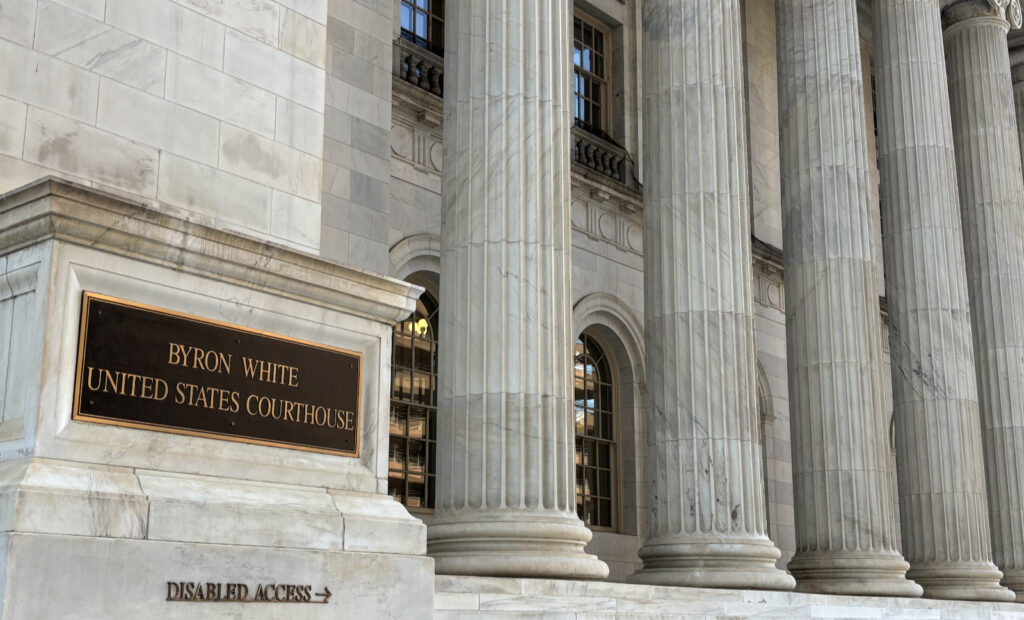
But a three-judge panel of the 10th Circuit Court of Appeals ruled Monday that Timmins’ remarks to reporters and the public “may have related to her job” but were not “ordinarily within the scope of her duties.”
“An employee does not speak pursuant to her official duties merely because her speech ‘owes its existence to’ or ‘relates to’ her employment,” says the ruling, drafted by Judge Harris Hartz.
According to court documents, Timmins was hired as general counsel of the water and sanitation district in 2019 to handle anticipated litigation stemming from the district’s plan to end an intergovernmental agreement with the Big Sky Metropolitan District. She also defended the Green Mountain board in a Colorado Open Records Act lawsuit brought by another metro district.
Timmins “repeatedly advised” board members during executive sessions that their communications with a legal consultant, John Henderson, were violating the open meetings law and she asked them to “stop using their personal emails for official business.” She also warned two board members they risked waiving attorney-client privilege by discussing the CORA lawsuit with Henderson, who she said was prohibited from providing legal advice to the district because he was a state employee.
“Notwithstanding Timmins’ advice,” board members Alex Plotkin, Karen Morgan and Jeffrey Baker “regularly met behind closed doors and privately agreed upon and took positions regarding District business and legal matters in consultation with Henderson,” the appeals court ruling says.
“After warning Plotkin and Baker privately to no avail,” Timmins complained about the alleged malfeasance during public meetings and with reporters and private citizens. She was fired in August 2021.
To evaluate whether a public employer violated the First Amendment by retaliating against an employee, courts apply a test outlined in two U.S. Supreme Court rulings, Garcetti v. Ceballos and Pickering v. Board of Education. Five elements must be established: (1) The protected speech was not made pursuant to an employee’s official duties; (2) The protected speech addressed a matter of public concern; (3) The government’s interests as an employer did not outweigh the employee’s free-speech interests; (4) The government’s interests as an employer did not outweigh the employee’s free-speech interests; and (5) The defendant would not have made the same employment decision in the absence of the protected speech.
“On this appeal, the sole question is whether Timmins spoke to the press and private citizens pursuant to her official duties,” Hartz wrote in the decision. Timmins satisfied step one of the Garcetti/Pickering test because “[h]er speech to reporters and private citizens may have related to her job, but it was not ordinarily within the scope of her duties.”
The 10th Circuit panel remanded the case to the district court for further proceedings.
Follow the Colorado Freedom of Information Coalition on X (formerly Twitter) @CoFOIC. Like CFOIC’s Facebook page. Do you appreciate the information and resources provided by CFOIC? Please consider making a tax-deductible donation.